
More than 9,000 incarcerated learners have started Chin Up! You Got This! this year and here’s why that matters
This feature blog highlights Shakila Stewart's "Chin Up! You Got This!" and Pathway to Empowerment™ program on Edovo. It details how the curriculum has engaged over 9,000 incarcerated learners since January 2026, offering them a meaningful space to reflect on identity, choices, and self-worth through her personal story.
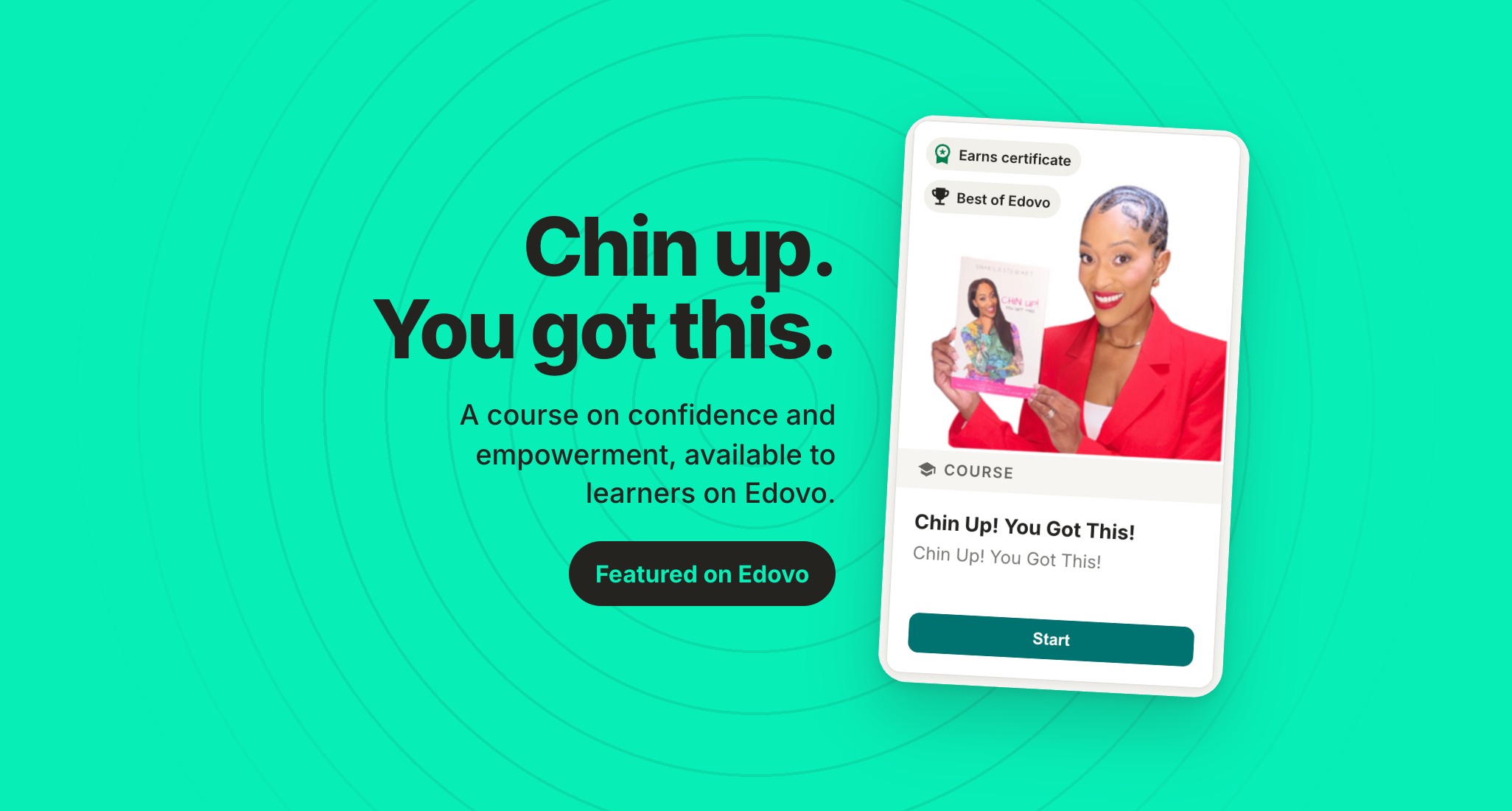
What happens when someone turns one of the hardest parts of their own story into an invitation for someone else to rethink theirs?
For Shakila Stewart, creator of Chin Up! You Got This! and Pathway to Empowerment™, that invitation has reached thousands of incarcerated learners in less than a year.
Shakila’s program was added to Edovo in January 2026. Since then, more than 9,100 learners have started the program, and 2,573 have completed her memoir, Chin Up! You Got This!
And this isn't a quick piece of content.
The full Pathway to Empowerment™ experience includes 18 lessons and approximately four hours of learning, taking learners through Shakila's story and into deeper reflection on identity, choices, self-worth and the future they want to build.
In less than a year, thousands of incarcerated people have chosen to spend their time doing that work.
A personal story turned into a pathway forward
Shakila has shared that Pathway to Empowerment™ began as part of her own healing and as a love letter to her mother.
For years, she didn't want people to know she had experienced foster care. Eventually, she began looking at her story differently: not as something to hide, but as something that could be used to help others see possibility in their own lives.
That experience became the foundation for Chin Up! You Got This! and the larger Pathway to Empowerment™ program.
On Edovo, learners don't simply read or listen to Shakila's story. They move through 18 lessons that use her experience as a starting point for examining their own.
From “Dream Big” to “Choices” to “You Got This”
Throughout the program, Shakila uses her own story to guide learners through themes of adversity, identity, choices, self-worth, faith and perseverance. Learners are encouraged to reflect on how their experiences have shaped them, recognize their own value, examine the choices they make, and think intentionally about the person they want to become.
The experience ultimately turns the focus from Shakila’s story to the learner’s own. In “Your Self-Worth Map: Designing the Life You Want to Build,” learners are invited to consider their value and the future they want to create. Shakila’s video library on posture, presence and personality adds practical guidance for how they show up in the world.
The program invites learners to wrestle with questions much bigger than the material itself:
Who am I? What experiences have shaped me? What choices are mine to make? What do I believe about my own worth? And what kind of life do I want to build from here?
Why those questions matter during incarceration
Incarceration can place enormous emphasis on a person's past: what happened, what went wrong and the decisions that brought them to where they are today.
Rehabilitation also requires space to think about what comes next.
That is what makes lessons around identity, agency, self-worth, decision-making and future planning especially meaningful for incarcerated learners.
A lesson about choices can become an opportunity to examine patterns and decisions. A chapter about affirmation can challenge the way someone sees themselves. A self-worth exercise can ask a learner to imagine a future that may feel very different from their present circumstances.
“This was a great course for me. It will help you dig deep and find a lot of things about yourself so you can be successful in life.”
- Tim, Edovo learner in Texas
Tim’s experience gets at the heart of why this kind of learning matters. And a memoir from someone willing to share her own experiences with adversity can demonstrate something that is difficult to communicate through instruction alone:
Your past is part of your story. It doesn't have to be the end of it.
That message carries particular weight in an environment where people can so easily be defined by one chapter of their lives.
9,104 individual decisions to begin
Perhaps the most compelling part of this story is how quickly learners have responded.
Pathway to Empowerment™ has only been available on Edovo since January 2026.
In the months since, 9,104 learners have chosen to begin it. And 2,573 learners have completed Shakila's memoir.
Those aren't simply engagement metrics.
Every start represents an individual deciding how to spend their time. And with 18 lessons and roughly four hours of material, engaging with Pathway to Empowerment™ asks something meaningful of the learner: their time, attention and willingness to reflect.
Learners aren't simply being given access to this material.
They're choosing it.
And when thousands of incarcerated people independently choose content centered on adversity, identity, choices, self-worth and possibility, that choice tells us something.
It tells us what learners are interested in exploring. It shows us where they are willing to invest their time. And it gives us another window into the work incarcerated individuals may be doing to understand themselves and prepare for what comes next.
One story can travel a long way
What began as part of Shakila's own healing has become an opportunity for thousands of other people to reflect on theirs.
And it happened in less than a year.
That's the power of bringing voices like hers into correctional education, and making meaningful learning available to people who are ready to engage with it.
Sometimes learning starts with gaining a new skill or piece of knowledge.
Sometimes it starts with encountering someone else's story and realizing: Maybe mine isn't finished yet.