
Bringing neuroscience to incarcerated learners: The Center for Law, Brain & Behavior + Edovo
What if understanding how your brain works could help you understand your choices—and change what comes next? In this post, you’ll learn why neuroscience is especially meaningful for incarcerated people, many of whom have lived through trauma, toxic stress, and addiction, and how this kind of education can support healing, resilience, and reentry. You’ll also find ways to explore and share accessible neuroscience resources that can help families, advocates, and legal teams better understand behavior and decision-making.
What if learning how the brain works could help you better understand your past and shape what comes next?
For many individuals in prisons and jails, the latest science about behavior, trauma, and addiction isn’t merely interesting information. Studying these topics to understand why we react the way we do, or how early experiences shape brain development, can be a powerful step toward healing and change.
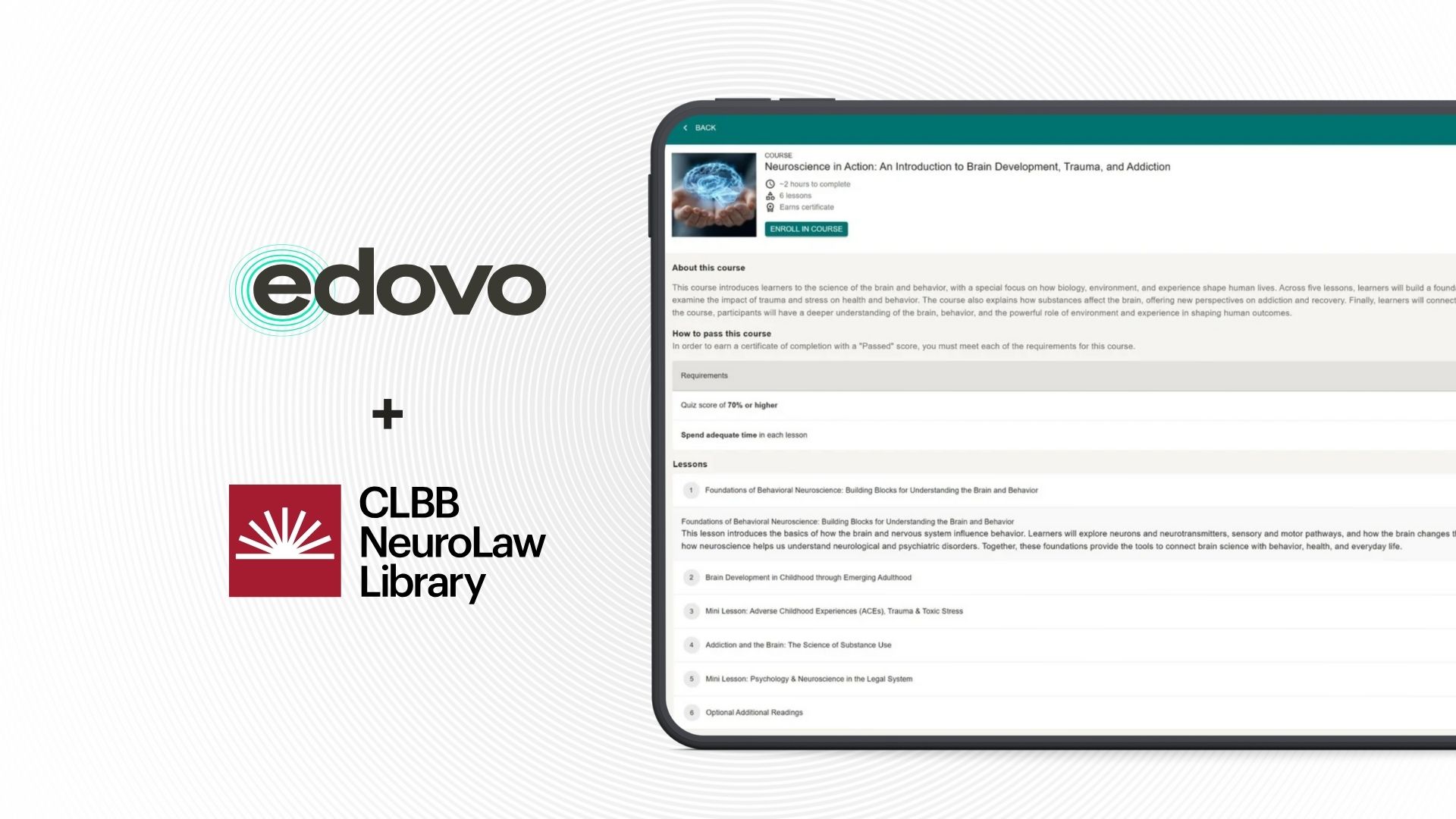
That’s why Edovo has partnered with the Center for Law, Brain & Behavior (CLBB) at Massachusetts General Hospital to bring Neuroscience in Action: An Introduction to Brain Development, Trauma, and Addiction to incarcerated learners nationwide. The course is now available in more than 1,400 prisons and jails across the United States through Edovo’s secure learning tablets, reaching over a million people.
It’s the first time a comprehensive neuroscience course has been made available at this scale inside correctional facilities.
Why neuroscience matters in correctional settings
Over the past several decades, neuroscience has reshaped how we understand behavior. Research shows that childhood adversity, trauma, and substance use can have lasting effects on brain development, influencing emotional regulation, impulse control, and decision-making well into adulthood.
These insights are important everywhere, but they are especially relevant for incarcerated populations, who are disproportionately affected by trauma, addiction, and adverse childhood experiences.
“Modern neuroscience has transformed our understanding of how traumatic early life experiences and substance use affect the brain,” says Stephanie Tabashneck, PsyD, JD, Director of the CLBB NeuroLaw Library. “Expanding access to this science inside prisons and jails is especially critical given the experiences many incarcerated people have faced.”
The course offers science-based explanations that help learners better understand themselves, their experiences, and their capacity for change.
What learners explore in Neuroscience in Action
The course was developed by CLBB’s interdisciplinary team of neuroscientists, clinicians, and legal scholars with accessibility at its core. It introduces foundational concepts in brain science and connects them directly to real-world experiences many learners recognize.
Across five lessons, learners explore how the brain develops from childhood into adulthood, how trauma and toxic stress affect neural pathways, how addiction changes brain function, and how neuroscience and psychology intersect with the legal system. Each lesson includes clear written material, short videos from experts in the field, and optional readings for those who want to delve deeper.
The goal is not just to deliver information, but to offer actionable insights. Understanding how the brain adapts and responds to experience can open doors to resilience, healing, and new ways of thinking about the future.
Expanding access to knowledge
Within the first month of launch, more than 7,000 incarcerated learners began the course. For many learners, this is the first time they’ve had access to scientific language that helps explain patterns they’ve lived with for years—and offers a framework for understanding how change is possible.
“Access to knowledge changes what people believe is possible for themselves,” says Brian Hill, Founder of Edovo. “By delivering neuroscience education inside prisons and jails, we’re helping learners better understand behavior, trauma, and resilience—an essential step toward personal growth and successful reentry.”
For CLBB, the course builds on a broader effort to make neuroscience accessible beyond academic and professional circles. In 2024, the organization launched the CLBB NeuroLaw Library, an open-access resource designed to translate complex brain science for legal practitioners, policymakers, and advocates. The library uses plain language and adjustable reading levels to make research usable for a wide range of audiences. Bringing neuroscience directly to incarcerated learners is a natural extension of that mission.
Take action and learn more
For individuals and loved ones navigating the legal system
If you or a loved one is involved in a legal case, neuroscience can matter. The CLBB NeuroLaw Library offers free, plain-language explanations of brain science and how it has been used in real court cases. You can share these resources with your attorney or a loved one’s attorney to help inform litigation, appeals, or sentencing arguments. The library also includes expert videos and case examples, as well as access to free affidavits grounded in current neuroscience research. Current modules include Juvenile & Emerging Adult Justice and Addiction & the Law, with modules focusing on cognitive decline, trauma, and memory set to release in 2026.
For attorneys and legal advocates
Explore the CLBB NeuroLaw Library to see how neuroscience is shaping arguments around trauma, addiction, brain development, and culpability. The Addiction and the Law and Juvenile and Emerging Adult Justice modules connect scientific findings directly to case law and provide expert videos that can be used in preparation, education, and advocacy.
For educators, practitioners, and policymakers
Stay up to date on the latest neuroscience in language that is accessible and actionable. The CLBB NeuroLaw Library translates complex research into usable insight across multiple reading levels, helping bridge the gap between science, policy, and practice.
Knowledge alone doesn’t change systems—but it can spark conversations, inform legal-decision-making, and improve outcomes. These resources are designed to make neuroscience available where it can make a real difference.